Understanding 16 Sanskar & Shodasha Sanskar: Phase 1 Garbha Avastha from an Ayurvedic View
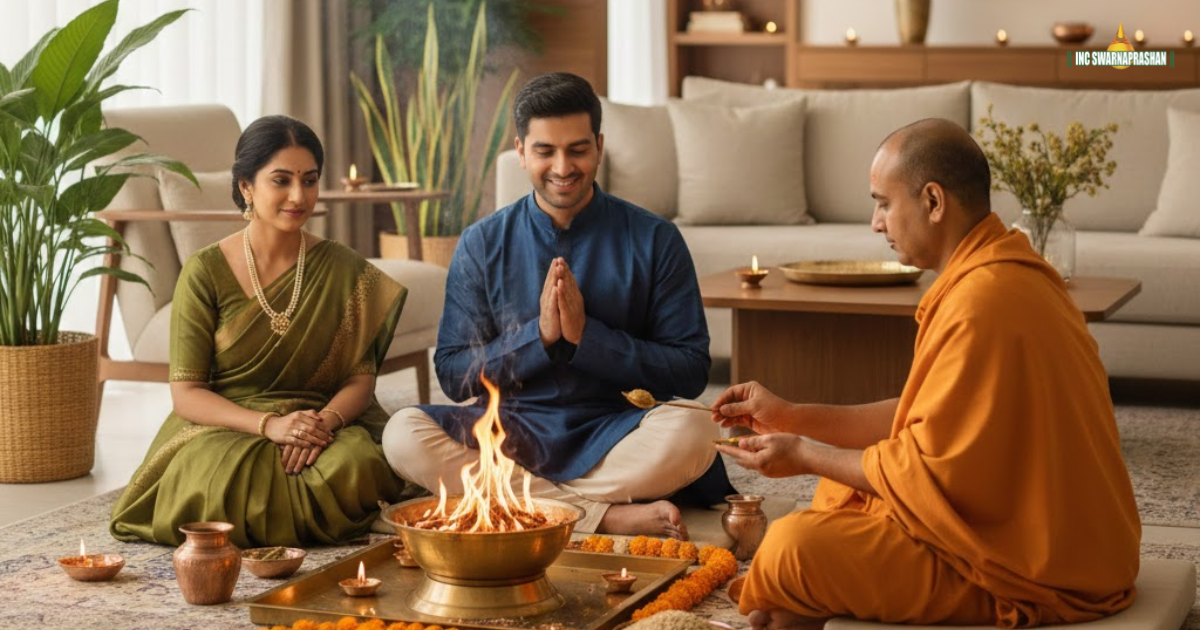
Phase 1: Garbha Avastha – Preparing for Life Before Birth (Ayurvedic Perspective for Modern Parents)
In Ayurveda and ancient Hindu wisdom, a child’s life does not begin at birth.
It begins much earlier—in thought, intention, and emotional readiness.
This early phase is called Garbha Avastha (गर्भ अवस्था)—the stage of preparing for life. It includes the time before conception and during pregnancy, when the foundation of a child’s body (shareer), mind (manas), and immunity (ojas) is formed.
As an Ayurvedic doctor (BAMS), I often tell parents:
“A healthy pregnancy is not only about medical reports. It is about the mental and emotional environment in which the child is invited.”
Phase 1 consists of three powerful Sanskars:
- Garbhadhana Sanskar – Conscious Conception
- Pumsavana Sanskar – Protection & Stability of the Fetus
- Simantonnayana Sanskar – Mother’s Emotional Wellbeing
Together, they form the deepest roots of a child’s life.
What Is Garbha Avastha?
Garbha means womb.
Avastha means stage or condition.
Garbha Avastha refers to the pre-birth stage, where life is formed not only biologically, but energetically and emotionally.
Ayurveda believes:
“Jaise beej hoga, waisa vriksha banega.”
As is the seed, so becomes the tree.
This phase prepares:
- the physical body of the baby
- the mental state of the mother
- the emotional environment of the home
Why Phase 1 Is the Most Important Sanskar Phase
Modern science now confirms what Ayurveda said thousands of years ago:
- Maternal stress affects fetal brain development
- Hormones cross the placenta
- Emotions influence nervous system wiring
Ayurveda simply said it earlier, in simpler words:
“Garbhini ka man shant ho, toh garbha bhi shant hota hai.”
This is why Garbha Avastha Sanskars focus more on peace, routine, nourishment, and emotional safety than on rituals.
1. Garbhadhana Sanskar – Conscious Conception
What Is Garbhadhana?
Garbhadhana Sanskar is the ritual of inviting a soul consciously.
It treats conception not as an accident, but as a sankalp (intention).
In ancient times, this meant:
- physical purification
- mental calmness
- prayer and readiness
In today’s world, Garbhadhana can be practised without complex rituals.
Garbhadhana in Modern Life (2026)
As a doctor, I interpret Garbhadhana as:
Physical Preparation
- correcting nutritional deficiencies
- balancing hormones
- addressing chronic stress or sleep issues
Mental Preparation
- emotional readiness for parenthood
- open communication between partners
- reducing anxiety and fear
Lifestyle Preparation
- fixed daily routine (dinacharya)
- clean food (satvik aahaar)
- reduced screen stress
Garbhadhana teaches us one thing clearly:
A calm beginning creates a calmer journey.
2. Pumsavana Sanskar – Protecting Early Pregnancy
Meaning of Pumsavana
Pumsavana comes from “pum” (life force) and “savana” (nourishment).
It focuses on protecting the fetus during the most sensitive phase—the first trimester.
This period is often filled with:
- nausea
- fatigue
- fear of miscarriage
- emotional vulnerability
Pumsavana reminds the family that the mother needs protection, not pressure.
Ayurvedic Understanding of Pumsavana
Ayurveda emphasises:
- rest over exertion
- warmth over cold exposure
- simple food over heavy meals
- emotional reassurance over advice overload
From a practical perspective:
- avoid overstimulation
- create predictable routines
- surround the mother with positive speech (shubha vaani)
Jo maa sunti hai, wahi garbh mehsoos karta hai.
3. Simantonnayana Sanskar – Mother’s Mental & Emotional Wellbeing
What Is Simantonnayana?
Simantonnayana is often misunderstood as a baby shower.
In reality, it is a mother-centric Sanskar.
The word means:
- “Simanta” – boundary of the mind
- “Unnayana” – lifting or elevating
This Sanskar is meant to uplift the mother’s mental state.
Why Mental Health During Pregnancy Matters
During pregnancy:
- the mother’s emotions directly affect cortisol levels
- stress hormones cross the placenta
- fear and loneliness can disturb fetal rhythms
Simantonnayana uses:
- music (sangeet)
- mantra
- blessings (ashirvaad)
- laughter and emotional support
Not to entertain—but to heal.
Simple Simantonnayana in Modern Homes
You do not need a big function.
A simple version can include:
- family sitting together
- gentle music or chanting
- kind words spoken to the mother
- reassurance and emotional warmth
This tells the mother:
“Tum akeli nahi ho.”
And that itself is powerful medicine.
Ayurvedic Diet & Lifestyle During Garbha Avastha
Ayurveda does not promote extremes during pregnancy.
Key principles include:
- satvik, warm, freshly cooked food
- regular meal timings
- adequate sleep
- gentle walks and breathing
Food should nourish ojas—the essence responsible for immunity and vitality.
Emotional Sanskar: The Invisible Influence
One of the most ignored aspects of Garbha Avastha is emotional hygiene.
Avoid:
- loud arguments
- constant fear-based news
- negative speech
Encourage:
- positive affirmations
- calm conversations
- gratitude practices
A peaceful womb creates a secure nervous system.
What If Someone Missed These Sanskars?
This is the most common worry I hear.
Let me say this clearly:
Sanskar is not punishment. Sanskar is support.
If you did not formally do these rituals, it does NOT mean you failed.
Any act done with:
- awareness
- love
- intention
…already carries Sanskar energy.
Role of Fathers & Family in Garbha Avastha
Ayurveda never places responsibility only on the mother.
Fathers and elders play a crucial role by:
- protecting the emotional space
- reducing expectations
- offering reassurance
- creating stability
Pregnancy is a family Sanskar, not a solo journey.
Conclusion: Preparing Life With Awareness
Garbha Avastha teaches us one timeless truth:
Life does not begin in the hospital. It begins in the heart.
When parents slow down, prepare consciously, and protect peace, they give their child something priceless—a stable foundation.
And that foundation supports the child for a lifetime.